
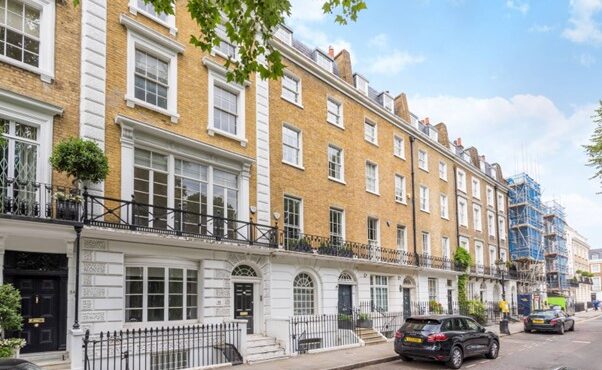
Managing Director of Burlingtons Real Estate Rob Prince discusses how in 2025 the UK housing market is cautiously rebounding, with stable prices and strong rental demand boosting investor confidence.
Rob’s article was published in Estate Agent Today, 3 May 2025.
The continued uncertainty caused by the US tariff policy continues to impact all markets on a daily – if not hourly – basis. While carefully controlled interest rate cuts were forecast by most analysts for this year, the expectations are now shifting towards deeper cuts than previously anticipated. All eyes will be on the Bank of England on 8th May to see whether it maintains a cautious approach amid growing global uncertainty.
The UK has seen a sluggish 12 months in the housing market, particularly London and the South-East. What was very much a ‘sellers-market’ has now shifted to a buyers-market, with increased emphasis on long-term affordability and staying power in home ownership.
Across the country, official figures show house prices were higher in February, compared to a year earlier. UK house prices jumped by 5.4% in the year since February – the fastest rate since December 2022. The annual rate increased by 4.8%, according to data from the ONS.
The much-publicised ‘tax incentive expiry’ at the end of March 2025 spurred demand among first-time buyers and those purchasing lower-value homes. The number of sales was 28% higher than in February 2024, and 13% higher than in January 2025, reflecting house buyers’ eagerness to beat the stamp duty deadline.
There is, however, some positive light at the end of the ‘home owning’ tunnel in 2025.
According to new figures, there are now more low-deposit mortgages available since the financial crisis of 2008. But whilst a widening choice brings greater opportunity, house purchase prices and rates are significantly higher. Those applicants in pursuit of lower rates (under 5%) typically must find an eye watering 40% deposit to secure agreement.
Barclays has been bold in its rate offering of 3.99%, but whilst headline grabbing, it is only available to borrowers with a 60% loan to value and a fee also applies. It is also for purchases and not re-mortgages.
A first-time buyers usual deposit would be in the region of 5-10% of any house purchase, but, even in the current unsettled market, a search still brings up between 442 – 845 products to choose from.
Despite indications of overall rate reductions, first time buyers are still in for a ‘rough ride’ in terms of affordability. The increased bills they now face, post-31 March, to maintain a home are rising at an unprecedented rate and on all fronts. Beyond mortgage costs and stamp duty, homeowners face surging energy bills, home insurance premiums, council tax, and general inflation.
Affordability will remain a sticking point throughout 2025, and we are unlikely to see any new house purchase incentives like the previous Governments ‘help to buy’ before the next budget to help first time buyers on the property ladder.
The whole demographic of the term ‘first time buyer’ has also evolved, sadly increasing steadily year on year, from an average age of 29 a little over 25 years ago, to an average age of 34 today.
By comparison, the average UK property price then was £80,000, with a deposit expectation by most lenders of £8,000. Now, the average house price has increased to a staggering £290,000 and with an average deposit requirement of £53,000. In terms of affordability, average UK salaries have only increased from £20,000 in 2000 to £35,000 today, this increase is not sufficient to service mortgage and general living costs.
In an attempt to increase the availability of homes and potentially stabilise pricing, the government is however proposing reforms to the planning system and a promise of 1.5m new build properties over the next 3 years. Whilst this would be positive, it is thought to be too ambitious and will take years for the benefits to be recognised – if ever delivered.
With inflation still above the Government’s 2% target and mortgage approvals declining again, households are still exercising caution when considering trading up or down. This is putting significant pressure on councils as residents seek to increase the size of their homes by way of planning applications, rather than trade up to release further housing stock as a natural progression.
The overall forecast for the UK housing sector in 2025 is not one of ‘doom and gloom’. There is no clear sign of a market crash, but the sector’s stability hinges on broader economic confidence. The Bank of England faces a critical balancing act: managing external geopolitical pressures while maintaining domestic economic stability.