Over the past two years the London property market faced a number of challenges like the increase in stamp duty land tax (SDLT), the general election, the Scottish referendum, and now the run-up to the EU referendum.
The uncertainty caused by these events has affected all segments of the London property market (prime central, central and non prime) however, as each segment is driven by different market forces, the impact has been non-uniform. During this two-year period despite the uncertainty, demand still outstripped supply and the average price of property in London (mainly non prime London) rose by 26%. This ‘supply—demand’ dynamic is key to understanding property price movements.
Although we expect a slowdown in non prime London, the market is also aware that there is a shortage of new homes in these areas. This will continue to apply upward pressure on property prices particularly when one considers that London’s population is expected to grow by 1.5 million within the next twenty years.
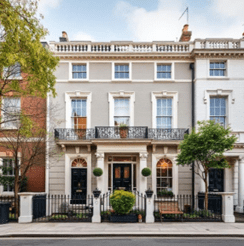
Compared to non prime London, property prices in prime central London generally tend to be more stable and less subject to large price swings. This is mainly because prime central London properties have different characteristics and attract a different type of investor. Investors in this part of London are looking for a safe, stable place to invest excess liquidity and are not usually ‘need’ driven. Furthermore, most properties in this relatively small part of central London are ‘listed’ or ‘period’ properties. This limits new supply to re-sales resulting in price appreciation in the long term. In this respect, prime central boroughs like the Royal Borough of Kensington and Chelsea have performed very well with average property prices increasing eight-fold over the past twenty years.
Stamp duty increases
The two recent increases in SDLT have principally impacted properties in the plus £1m price bracket and the buy-to-let market. In an efficient market though, these one-time ‘shocks’ are absorbed by a proportional reduction in selling prices. In London this SDLT-related price adjustment process started in 2015 and will probably end sometime in 2016.
EU referendum
The uncertainty ahead of the EU referendum is affecting investor confidence and many are adopting a wait and see approach. Whilst a vote to stay in would immediately trigger a return to the norm, an exit vote will delay it. Either way, in the long term this uncertainty will disappear and price equilibrium will be restored.
What lies ahead
With solid fundamentals and continued investment in infrastructure, London remains one of the most attractive capitals in which to live, work and invest. The uncertainties summarized above, although destabilizing in the short term, will actually benefit those seasoned investors capable of seeing through the chaos. We expect prime central London to experience slower growth than non prime London during this time. In the longer term however we favour prime central London (up to the £5m price point) mainly because of the consistently strong demand, fairly static supply and the more stable growth patterns.
These conditions make 2016 a good year for investors ready to take advantage of the long term appreciation prospects that such a prized market has to offer.